


By WorldMajorEvents | March 2026
The Middle East conflict entered a dangerous new phase after the United States launched a major strike on Kharg Island, Iran’s most critical oil export hub. The operation, ordered by U.S. President Donald Trump, targeted military installations on the island—often described as the “crown jewel” of Iran’s energy infrastructure.
While Washington says oil facilities were deliberately spared, the attack has dramatically escalated tensions in the 2026 Iran war and raised fears of a global energy shock. Analysts warn that the island sits at the heart of Iran’s economy and that any sustained damage could ripple through international oil markets.
What Happened: The U.S. Strike on Kharg Island
According to statements from the U.S. administration, American forces conducted a large-scale bombing raid against military positions on Kharg Island. The strike reportedly targeted defense systems and military infrastructure located around the island.
President Trump said the operation “obliterated” military targets, describing it as one of the most powerful bombing raids carried out in the region. However, he emphasized that the United States chose not to destroy the island’s oil infrastructure—for now.
Washington also warned Tehran that any interference with shipping through the Strait of Hormuz could trigger future strikes directly on Iran’s oil facilities.
The strike marks the first time the conflict has directly hit Iran’s main oil export gateway, significantly raising the stakes in the ongoing war.
Why Kharg Island Matters So Much
Despite its small size, Kharg Island is one of the most strategically important energy locations in the world.
The island handles around 90% of Iran’s crude oil exports, making it the backbone of the country’s oil economy.
Key facts about Kharg Island:
- It is Iran’s primary oil export terminal in the Persian Gulf.
- Tankers loaded here supply crude to major markets in Asia and beyond.
- The island has massive storage tanks, pipelines and tanker loading terminals.
- It can handle millions of barrels of oil shipments per day.
Energy analysts often describe Kharg as Iran’s economic lifeline. Without it, Iran’s ability to sell oil internationally could collapse almost overnight.
Because of its importance, the island has long been considered a “red line” target that could dramatically escalate any regional war.
The Wider Context: The 2026 Iran War
The strike comes amid a rapidly expanding conflict involving the United States, Iran and Israel.
The war began in late February when U.S. and Israeli forces launched coordinated strikes on Iranian military and missile infrastructure. The attacks were intended to weaken Iran’s military capabilities and deter potential nuclear ambitions.
Iran responded with waves of missile and drone attacks targeting U.S. bases and Israeli cities across the region. Since the start of the conflict:
- Hundreds of missiles and thousands of drones have reportedly been launched by Iran.
- Multiple military bases and strategic infrastructure sites across the Middle East have been struck.
- Regional airspace closures and economic disruptions have followed.
The conflict has already caused thousands of casualties and displaced large numbers of civilians.
Oil Markets on Edge
Energy markets are watching Kharg Island closely because the global oil supply could be severely disrupted if exports from the island stop.
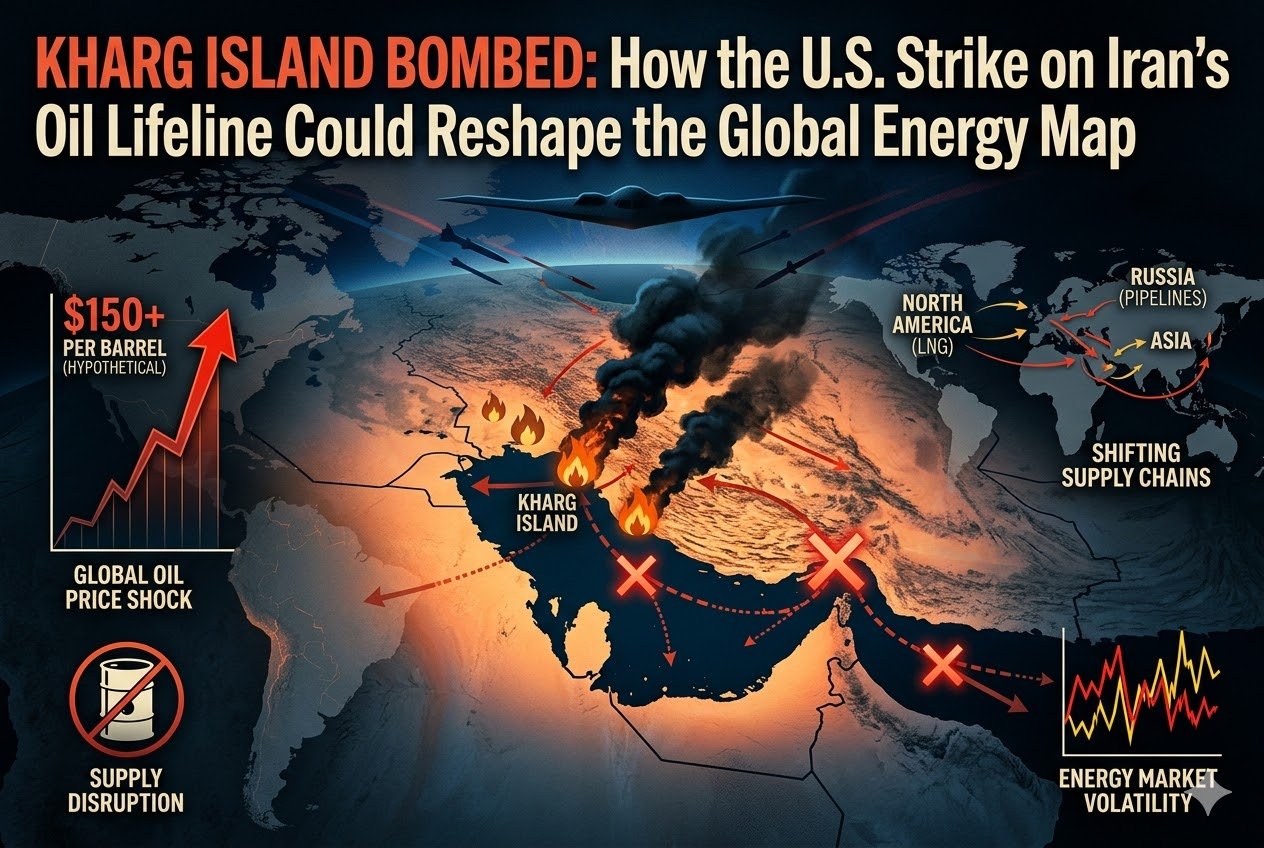
Analysts warn that a full shutdown could remove millions of barrels of oil per day from global supply. Some projections suggest oil prices could surge to $150 per barrel or higher if the island’s infrastructure were destroyed or blockaded.
Several factors make the situation particularly sensitive:
- Iran is a major oil exporter, especially to Asian markets.
- Much of the world’s oil shipping passes through the nearby Strait of Hormuz.
- Any attack on energy infrastructure could trigger retaliatory strikes across the Gulf.
For global markets already dealing with tight supply, the Kharg Island crisis represents one of the biggest energy risks in years.
Iran’s Response and Rising Regional Risks
Iranian officials quickly condemned the U.S. strike and warned of serious consequences.
Tehran has signaled that attacks on its oil infrastructure would trigger retaliation against energy facilities linked to U.S. allies in the region.
Military tensions are rising across several fronts:
- Iranian missiles and drones continue targeting regional bases.
- U.S. forces are deploying additional troops and naval assets to the Middle East.
- Warships are expected to escort oil tankers through the Strait of Hormuz.
The possibility of a broader regional conflict involving Gulf states remains a major concern for global policymakers.
A Strategic Signal from Washington
Some analysts believe the strike on Kharg Island was designed to send a strategic message rather than cripple Iran’s economy immediately.
By targeting military facilities while sparing oil infrastructure, the United States appears to be signaling that Iran’s energy lifeline remains vulnerable.
This approach gives Washington leverage in the conflict while avoiding an immediate shock to global energy markets.
However, if tensions escalate further, Kharg Island could become one of the most important battlegrounds in the Middle East.
What Happens Next?
The future of Kharg Island could shape both the outcome of the war and the trajectory of global energy markets.
Three possible scenarios are now being widely discussed by analysts:
1. Limited strikes continue
Military targets are hit but oil exports remain mostly intact.
2. Energy infrastructure becomes a target
Oil terminals or storage tanks are destroyed, causing a global oil shock.
3. Naval escalation in the Strait of Hormuz
Shipping routes are threatened, triggering a major energy crisis.
Each scenario carries enormous geopolitical and economic consequences.
The Bottom Line
The U.S. strike on Kharg Island marks a pivotal moment in the 2026 Iran war. By hitting the military defenses of Iran’s most important oil export hub, Washington has demonstrated its ability to threaten the country’s economic lifeline without yet triggering a full energy crisis.
But the warning is clear: the world’s oil markets are now tied directly to the outcome of a rapidly escalating conflict in the Persian Gulf.
And if Kharg Island becomes a direct target in the next phase of the war, the shockwaves could reach far beyond the Middle East—impacting economies, energy prices and global stability.