




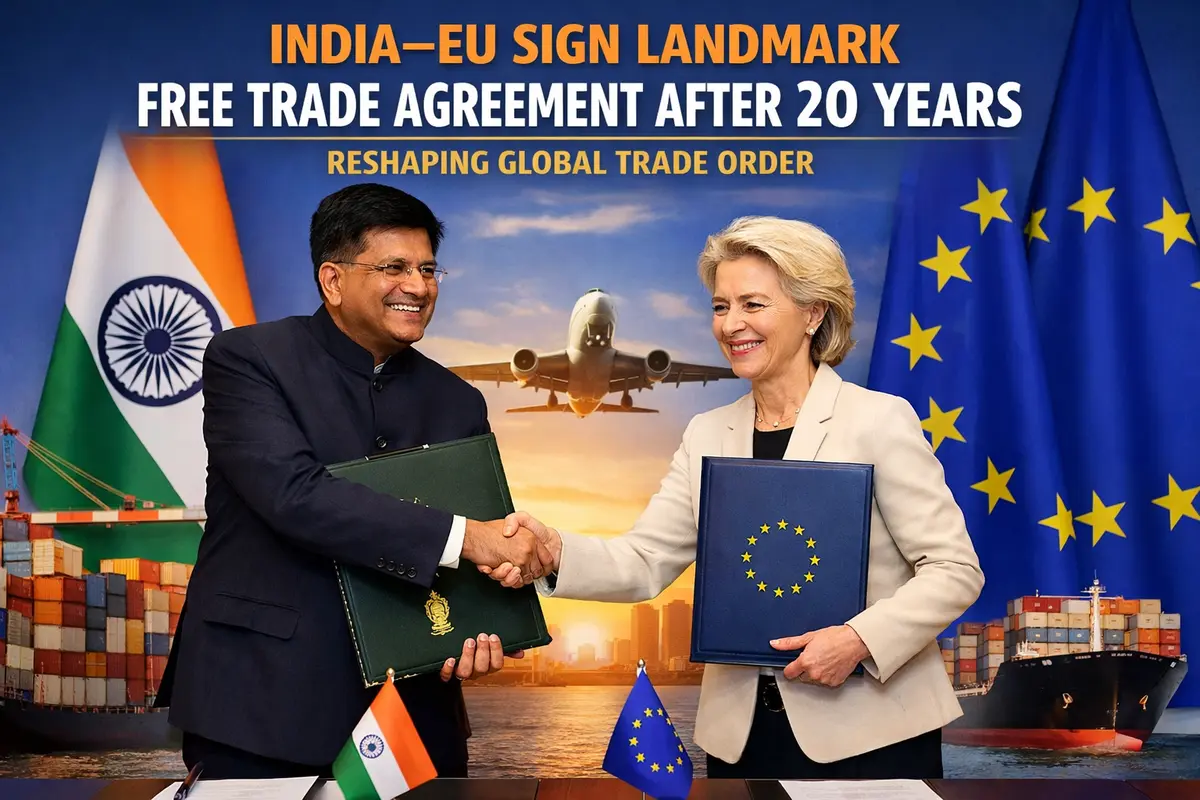
New Delhi / Brussels, January 27, 2026 — WorldMajorEvents
India and the European Union have sealed a historic Free Trade Agreement (FTA) after nearly two decades of negotiations, marking one of the most consequential global trade deals of the decade. Prime Minister Narendra Modi and European Commission President Ursula von der Leyen formally announced the agreement at the India–EU Summit, calling it the “mother of all trade deals” and a turning point in economic and geopolitical cooperation.
The agreement, finalised amid growing uncertainty in global trade and rising protectionism, creates a vast economic corridor linking India’s 1.4 billion consumers with the 27-nation European Union, the world’s largest single market.
What Is the India–EU Free Trade Agreement?

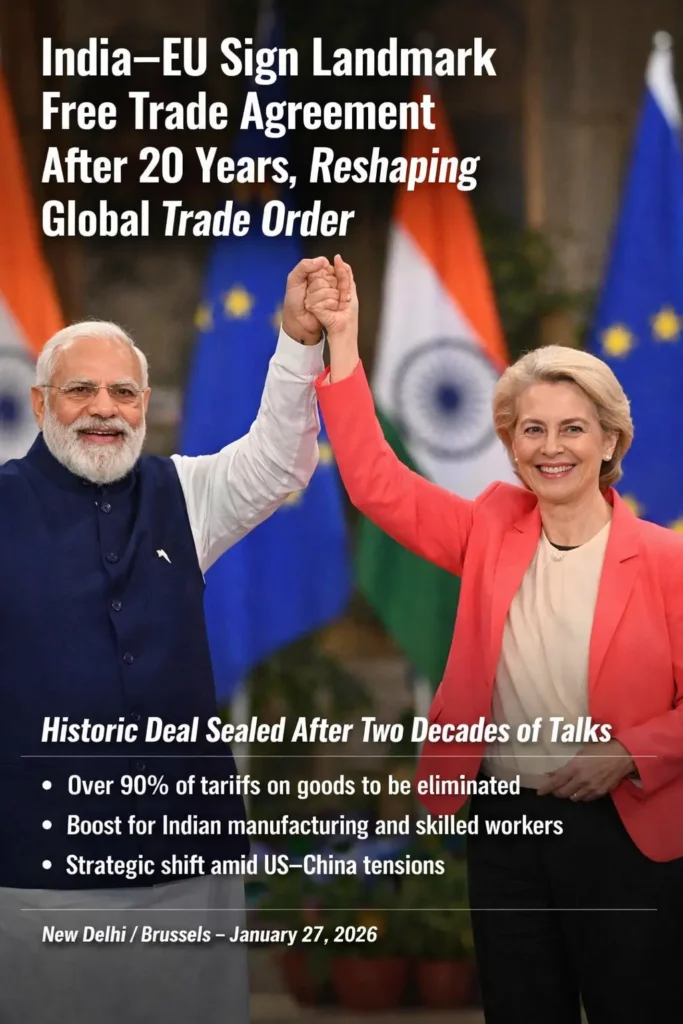
The India–EU FTA is a comprehensive trade and investment pact covering goods, services, digital trade, mobility, sustainability and supply chains. Once fully implemented, it will eliminate or sharply reduce tariffs on over 90% of traded goods, simplify regulations and improve market access on both sides.
Negotiations began in 2007, stalled for years over disagreements on tariffs, labour standards, data protection and environmental rules and were revived in 2022 amid shifting global alliances.
Key Highlights of the India–EU Trade Deal
Massive Tariff Reductions
- Over 90% of EU exports to India will see tariff cuts or zero duties
- Wine, chocolates, automobiles, machinery, medical devices and luxury goods will become significantly cheaper in India
- Indian exports such as textiles, garments, footwear, pharmaceuticals, chemicals, jewellery and agricultural products gain expanded duty-free access to Europe
Boost for Indian Manufacturing and Jobs
The agreement is expected to strengthen Make in India, expand manufacturing and generate millions of jobs, especially in MSMEs, textiles, electronics and auto components.
Services, Mobility and Skilled Workers
- Easier movement for Indian IT professionals, engineers, healthcare workers and researchers
- Recognition of professional qualifications
- Expanded access for Indian service firms in the EU market
Digital Trade and Data Protection
For the first time, both sides agreed on rules for digital trade, data flows and emerging technologies, balancing innovation with privacy protections.
Sustainability and Climate Commitments
The FTA includes enforceable commitments on:
- Climate action
- Labour rights
- Environmental standards
- Clean energy cooperation
This was a critical EU demand and one of the toughest hurdles during negotiations.
Why This Deal Matters Now
A Strategic Hedge Against Global Uncertainty
The agreement comes as global trade faces disruption from:
- US–China tensions
- Renewed tariff threats from former US President Donald Trump, who has criticised the deal
- Supply chain shocks and geopolitical conflicts
By deepening India–EU ties, both sides are reducing dependence on volatile trade routes and creating a stable, rules-based economic partnership.
Europe’s Fastest-Growing Major Partner
India is now among the EU’s fastest-growing trading partners, while Europe is India’s largest export destination. Bilateral trade crossed €120 billion in recent years and is projected to double within a decade under the FTA.
Global Reactions: Support, Caution and Strategic Signals
- Prime Minister Narendra Modi said the deal “opens a new chapter of shared prosperity and trust.”
- Ursula von der Leyen declared, “We did it. This agreement reflects Europe’s confidence in India as a long-term strategic partner.”
- The deal has reportedly drawn concern in Washington, where President Trump warned of tougher US tariffs in response to what he called “unfair trade advantages.”
- Global markets reacted positively, with Indian equities gaining in sectors like IT, pharma, auto ancillaries, textiles and logistics.
Impact on Indian Consumers and Businesses
For Indian consumers, the agreement means:
- Cheaper European cars, wine, cheese, chocolates, cosmetics and high-end electronics
- Greater product variety and improved quality standards
For businesses:
- Predictable trade rules
- Faster customs clearance
- Access to European supply chains and advanced technologies
What Happens Next?
The agreement will now undergo legal vetting and ratification by:
- The European Parliament
- EU member states
- India’s Cabinet and Parliament
While provisional implementation could begin within a year, full rollout will occur in phases over the next decade, allowing sensitive sectors time to adjust.
A Defining Moment for Global Trade
The India–EU Free Trade Agreement is more than an economic pact. It signals:
- India’s rise as a central pillar of the global economy
- Europe’s strategic pivot toward Indo-Pacific partnerships
- A renewed commitment to open, rules-based trade at a time of growing fragmentation
As global power balances shift, this deal may well shape the future architecture of international trade.