


By WorldMajorEvents | March 2026
The global energy system is facing one of its biggest shocks in years. As geopolitical tensions escalate in the Middle East and oil shipments through the critical Strait of Hormuz face severe disruptions, major economies have taken an unprecedented step to stabilize markets.
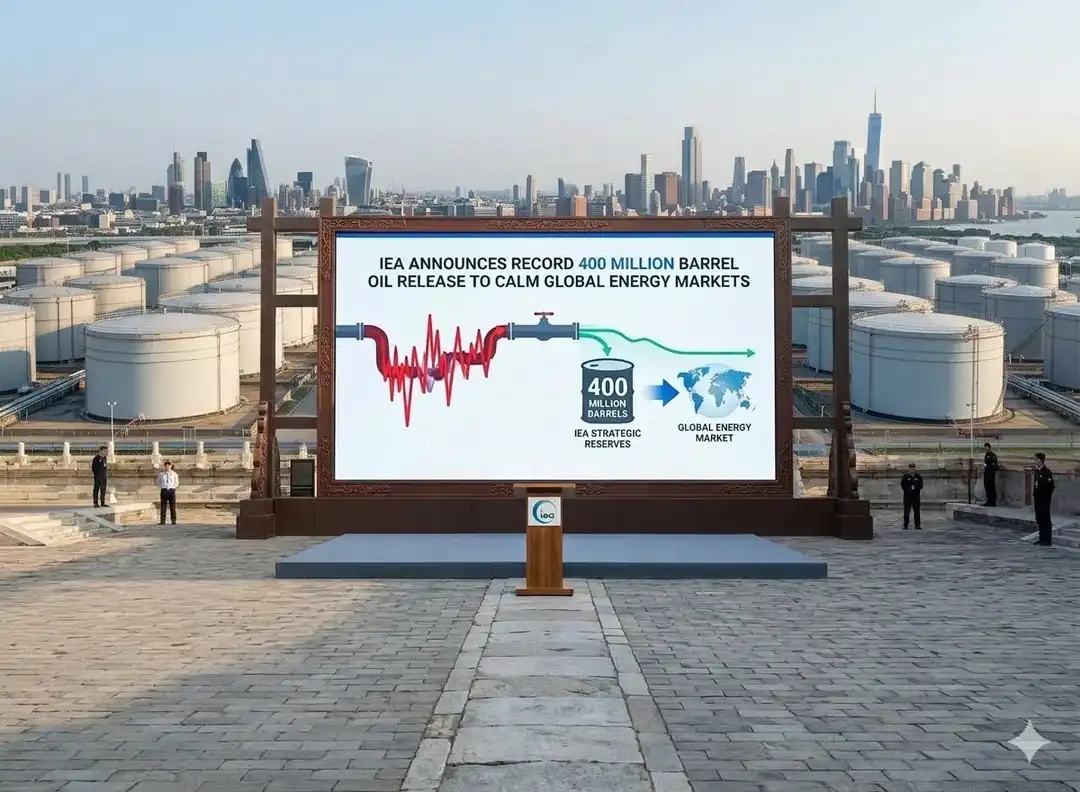
The International Energy Agency (IEA) and its member nations have agreed to release 400 million barrels of oil from emergency reserves, the largest coordinated release in the organization’s history. The move is designed to cool surging oil prices, prevent supply shortages and reassure global markets amid mounting uncertainty.
This historic intervention highlights how fragile the global energy supply chain can become when geopolitical tensions threaten key oil transit routes.
Why the IEA Is Releasing Emergency Oil Reserves
The emergency action comes after the Middle East conflict significantly disrupted global oil flows, particularly through the Strait of Hormuz, one of the world’s most important energy chokepoints.
Roughly 20–25% of global seaborne oil trade passes through this narrow waterway, making any disruption immediately felt across international markets.
Since the conflict escalated in late February 2026, shipping traffic through the strait has fallen dramatically and oil exports from the region have plunged. This has forced some producers to cut output and has pushed oil prices sharply higher.
Brent crude briefly surged close to $120 per barrel earlier in the week, triggering fears of a new global energy crisis.
To prevent panic in markets and protect consumers from soaring fuel costs, IEA member countries decided to deploy their strategic petroleum reserves.
IEA Executive Director Fatih Birol described the move as necessary given the scale of the disruption, noting that the challenges facing oil markets are “unprecedented in scale.”
Largest Oil Reserve Release in History
The 400 million-barrel release marks the largest coordinated stockpile drawdown ever organized by the IEA.
Key details include:
- 400 million barrels to be released from emergency reserves
- Coordinated by 32 IEA member countries
- Intended to stabilize global oil supply and prices
- Release timeline will vary by country depending on national policies
The scale of the move is remarkable. It is more than double the previous record release of 182 million barrels in 2022, which followed the Russia-Ukraine war and its impact on energy markets.
IEA members collectively hold over 1.2 billion barrels of government-controlled emergency oil stocks, with another 600 million barrels held by industry under government obligations.
This massive strategic reserve system was created after the 1970s oil crisis to protect global economies from supply shocks.
How the Oil Release Will Work
Unlike a single massive dump of oil into the market, the reserves will be released gradually.
Each participating country will decide how quickly and in what form to release its oil stocks, allowing flexibility based on national circumstances.
The United States, which holds the largest emergency reserves through its Strategic Petroleum Reserve, is expected to contribute a major portion of the supply.
Other major economies including Japan, the United Kingdom, France, Germany and Canada are also expected to participate in the coordinated release.
Some countries may release crude oil directly, while others may release refined products such as diesel or gasoline depending on market needs.
Oil Prices Remain Volatile Despite Intervention
Although the announcement of the reserve release initially helped calm markets, oil prices remain highly volatile.
After briefly touching nearly $120 per barrel, prices eased slightly but continued to fluctuate around $85–$92 per barrel amid ongoing geopolitical uncertainty.
Analysts warn that while emergency reserves can provide temporary relief, they cannot fully offset major supply disruptions if the conflict continues.
Some experts point out that the global oil market could lose millions of barrels per day of supply if shipments through the Strait of Hormuz remain restricted.
In that case, the strategic reserve release may only buy time until shipping routes reopen or production increases elsewhere.
Why the Strait of Hormuz Matters to the World
The crisis highlights the strategic importance of the Strait of Hormuz, a narrow shipping channel connecting the Persian Gulf to global markets.
Every day, approximately 20 million barrels of oil and petroleum products normally pass through the strait, representing about a quarter of global seaborne oil trade.
If this route remains partially closed or unsafe for tankers, the impact could ripple across the entire world economy.
Oil-dependent countries in Asia and Europe would face immediate supply pressure, while fuel prices could rise sharply for consumers worldwide.
Global Economic Risks
The energy shock comes at a time when many economies are already dealing with inflation and high interest rates.
Higher oil prices can lead to:
- Rising gasoline and diesel costs
- Increased transportation and manufacturing expenses
- Higher inflation globally
- Slower economic growth
Economists warn that prolonged supply disruptions could even trigger a broader global economic slowdown if energy prices remain elevated for months.
A Critical Test for Global Energy Security
The coordinated release of emergency reserves is only the sixth such intervention in the IEA’s history, underlining how serious the current situation is.
While strategic stockpiles are designed to stabilize markets during crises, they are ultimately a temporary solution.
Long-term stability will depend on restoring safe shipping routes in the Persian Gulf and ensuring oil continues to flow from major producing regions.
For now, the IEA’s historic decision demonstrates how governments are willing to act collectively to prevent an energy crisis from spiraling into a global economic shock.
Conclusion
The release of 400 million barrels of emergency oil reserves marks a historic intervention in global energy markets. Triggered by geopolitical tensions and disruptions to one of the world’s most important oil routes, the move aims to stabilize supply, calm prices and reassure investors.
However, the effectiveness of this strategy will ultimately depend on how quickly the geopolitical situation improves and whether normal oil shipments can resume through the Strait of Hormuz.
Until then, the world’s energy markets are likely to remain on edge.